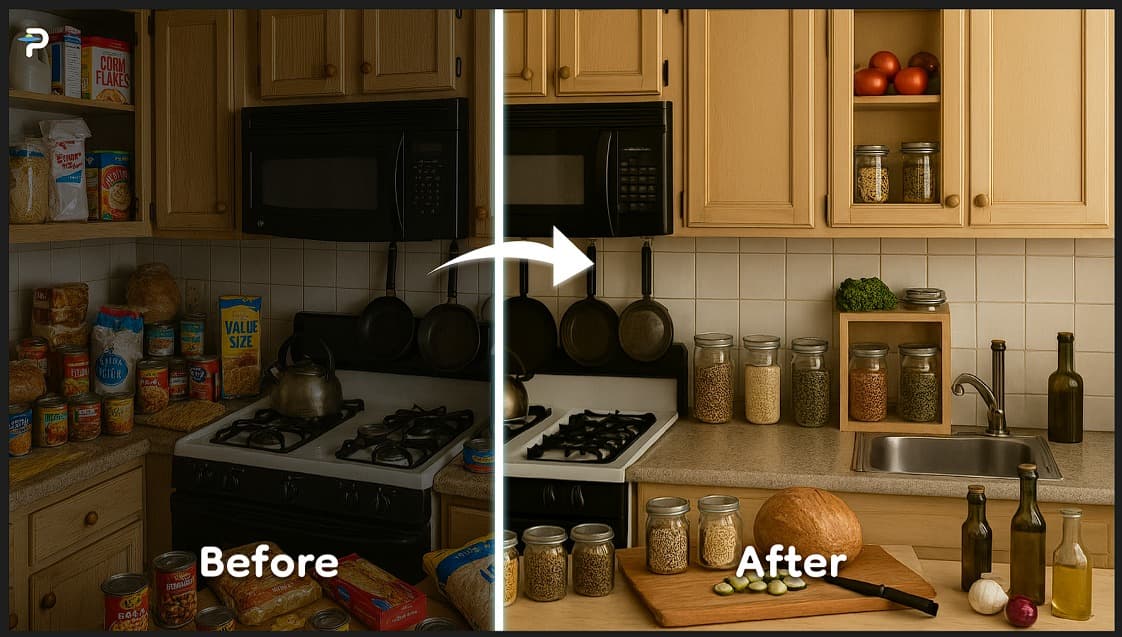
But as we move through 2026, a shift is happening. We are moving away from the "Stockpile Mentality" and toward the Zero-Inventory Kitchen.
This isn't about restriction; it’s about flow. It’s a circular approach to eating that treats your kitchen like a living ecosystem rather than a storage unit. Here is how to transition from bulk-buying chaos to a mindful, zero-waste sanctuary.
Before we fix the pantry, we have to fix the mindset. Most food waste starts at the grocery store, driven by the anxiety that we might "run out." This leads to over-purchasing perishables and "zombie cans" that sit unused.
The Zero-Inventory model operates on a "Just-in-Time" philosophy. Instead of storing a month's worth of food, you maintain a lean, high-rotation selection of ingredients that you actually love and use. It’s about quality over volume, and presence over preparation.
You don’t need an expensive "smart fridge" to have a smart kitchen. Mindful inventory management starts with visibility. If you can’t see it, you won't eat it.
- The Glass Jar Method: Decant dry goods into clear glass jars. This provides an instant visual cue of your stock levels, removing the need for "inventory checks."
- Digital Tallying: Use simple, collaborative apps to keep a live "running list." When the last of the olive oil is opened, it’s added to the list immediately, not when the bottle is empty.
- The "First In, First Out" (FIFO) Rule: This professional chef’s secret ensures that older items are moved to the front. It’s a simple habit that prevents "shelf-aging" your ingredients.
The backbone of a zero-inventory kitchen is the death of the "Big Weekly Shop." Instead, lean into Micro-Subscriptions.
In 2026, local urban farms, bakeries, and community-supported agriculture (CSA) programs have evolved. Rather than a massive box of random veggies, look for hyper-local services that deliver smaller, high-frequency "refill packs." Whether it’s fresh sourdough every Tuesday or a specific set of seasonal greens every Friday, these smaller "drips" of food ensure everything is eaten at its peak nutritional value.
A circular kitchen means the "scraps" of today are the "base" of tomorrow.
- Stem-to-Root Cooking: Learn to use broccoli stalks for slaw and herb stems for pestos.
- The Perpetual Stock: Keep a container in your freezer for clean veggie offcuts. Once full, simmer them into a zero-cost, high-flavor broth.
Beyond the environmental impact, a Zero-Inventory Kitchen is a productivity hack. When you remove the "decision fatigue" of digging through a cluttered pantry, cooking becomes a meditative act rather than a chore. You save money by eliminating "phantom spending" on duplicates, and you eat better because your food is, by definition, fresher.
The goal isn't a perfectly empty shelf, it’s a shelf where every single item has a purpose and a date with your dinner plate.