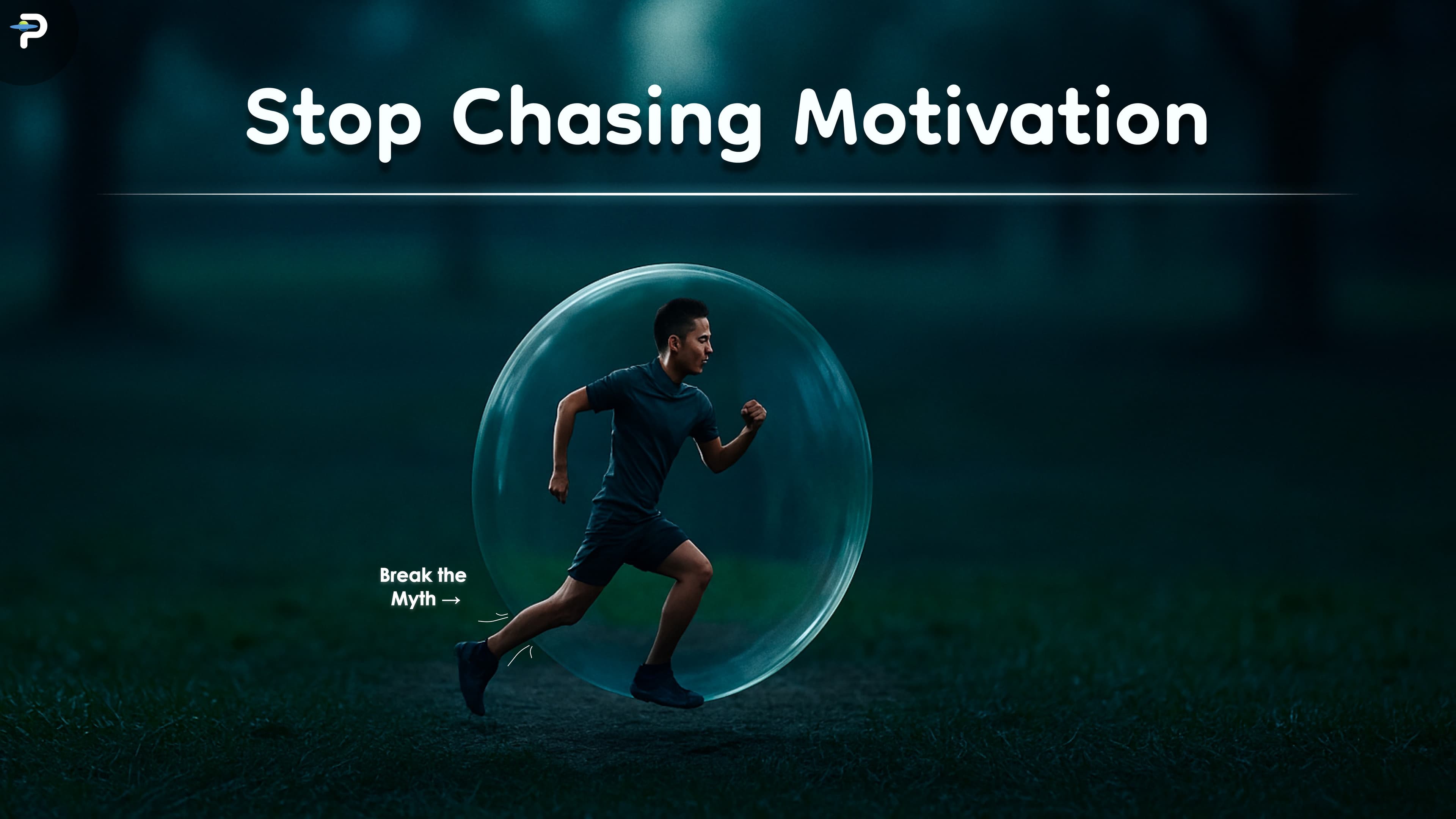
Here's the thing nobody tells you: motivation is not a personality trait. It's not something the productive, successful people of the world simply have more of. Motivation is a feeling, and feelings, by nature, are unreliable. They come and go based on how well you slept, whether you had a bad meeting, what the weather looks like outside. Building your life around motivation is like building a house on quicksand and wondering why it keeps sinking.
The people who have figured this out, and I mean really figured it out, stopped waiting to feel motivated. Instead, they got sneaky. They started designing their environments so that the right behavior became the path of least resistance.
Here's some neuroscience that should make you feel better about every failed resolution you've ever had: your brain is wired to conserve energy. It's not lazy in a bad way, it's lazy in a brilliantly efficient way. Given the choice between something easy and something hard, your brain will almost always nudge you toward easy. It's not a flaw. It kept your ancestors alive.
The problem is that in the modern world, "easy" has been engineered by corporations to mean doomscrolling, eating junk food, and binge-watching five episodes when you meant to watch one. The path of least resistance has been quietly hijacked.
So the game isn't to fight your brain's preference for easy. The game is to redesign what easy looks like.
Think about your kitchen counter for a second. Whatever's sitting on it right now is what you'll probably eat tonight. Not because you made a conscious decision, but because it was there. Visible. Accessible. Easy.
This is what behavioral scientists call "choice architecture", the idea that the way your environment is structured silently shapes the decisions you make all day long, often without you realizing it. You are not making free choices as much as you're responding to cues.
A bowl of fruit on the counter gets eaten. A bag of chips in the back of the top cabinet stays there longer. Same person, different outcome, just because of placement.
This logic scales to everything.
Want to read more? Put a book on your pillow every morning so it's literally in your face when you go to bed. Want to exercise in the morning? Sleep in your gym clothes. Sounds ridiculous, I know. But it works, because it collapses the friction between intention and action down to almost nothing.