The information provided on this publication is for general informational purposes only. While we strive to keep the information up to date, we make no representations or warranties of any kind about the completeness, accuracy, reliability, or suitability for your business, of the information provided or the views expressed herein. For specific advice applicable to your business, please contact a professional.
Why making some parts of your life harder will make you happier.
In a world where you can summon a burrito to your door with two taps or unlock your house with a thumbprint, we’ve spent billions of dollars and decades of engineering to achieve one goal: removing friction. We want everything faster, smoother, and, most importantly, easier.
We are a cutting-edge technology company specializing in software development, AI-driven solutions, and enterprise IT services. Founded in 2015, the company has established itself as a leader in digital transformation, helping businesses leverage technology for growth and efficiency.
12 hours ago5 min read
0
But have you noticed that the easier life gets, the more restless we feel?
There is a growing realization in 2026 that "convenience culture" has a massive side effect: it robs us of the very moments that make life feel real. Enter Intentional Friction. This isn’t about being a luddite or making your life miserable for the sake of it. It’s the practice of choosing the "hard" way because the effort itself provides a hit of satisfaction that an algorithm can’t replicate.
The Psychology of the "Hard Way"
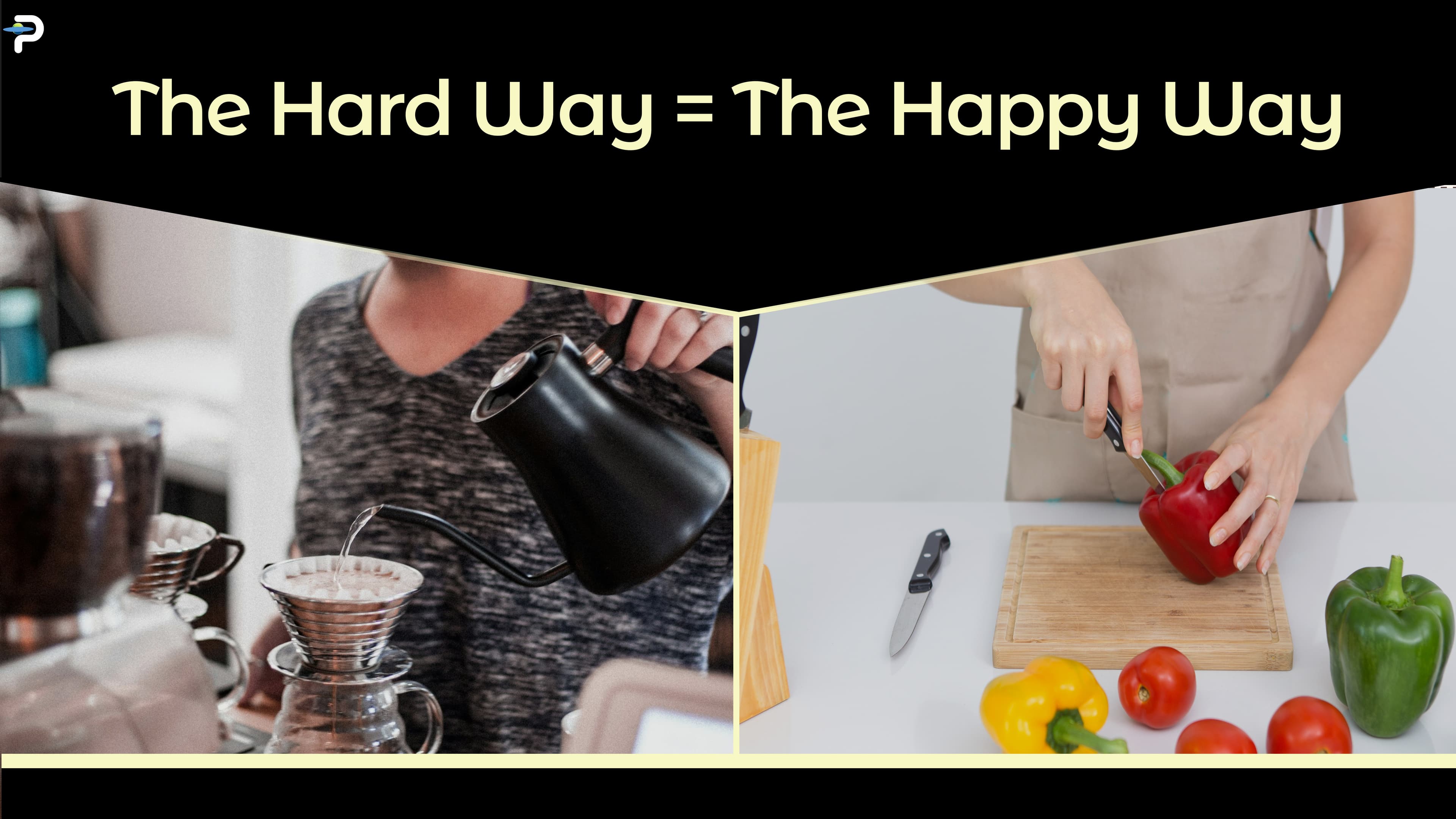
When everything is automated, we become spectators in our own lives. If your coffee comes from a pod, you’re just a consumer. But if you stand there at 7:00 a.m., feeling the resistance of the beans as you turn a hand-crank grinder, you’re a participant.
Psychologically, this is tied to something called effort justification. We value things more when we have to work for them. That hand-ground cup of coffee actually tastes better, not just because the grind is more precise, but because your brain has a "vested interest" in the outcome. You put in the work; now you’re reaping the reward.
Where Convenience Fails Us
The problem with total convenience is that it eliminates the "buffer" in our day. In the past, "friction" gave us time to think.
Waiting for a letter meant you had days to anticipate the news.
Walking to the store meant you saw the sky and moved your body.
Manual car windows meant you had a physical relationship with your machine.
When we remove that friction, we fill the empty space with more "doing." Instead of enjoying the five minutes it takes for the kettle to boil, we check our email. Instead of walking, we drive, so we can get back to work faster. We’ve optimized the joy right out of our schedules.
How to Inject "Good" Friction Into Your Life
Related Articles
Discover more articles you may like.
Sponsored Articles
Related Articles
Discover more articles you may like.
Top Writers
Some top of the line writers.
Best from Author
Best Articles from Top Authors
Top Writers
Some top of the line writers.
Best from Author
Best Articles from Top Authors
You don’t need to move to a cabin in the woods to experience this. You just need to find the areas where convenience has made you numb and introduce a little resistance.
1. The "Analog" Kitchen
Stop using the food processor for everything. Try chopping your vegetables with a properly sharpened chef’s knife. Feel the texture of the onion, hear the rhythm of the blade on the wood. It’s meditative. It turns "cooking" from a chore into a craft.
2. The Commute Audit
If you live close enough, bike or walk to work once a week. Yes, it takes longer. Yes, you might get a bit sweaty. But you will arrive with a sense of place. You’ll know which trees are blooming and which neighbors have new dogs. That "friction" anchors you to the physical world.
3. Deep Work vs. Shallow Taps
Try writing your first draft or your daily to-do list with a fountain pen and paper. There’s a physical resistance when the nib hits the page. You can’t "delete" as easily, which forces you to think more carefully before you commit. It’s slower, and that’s exactly why it works.
The Security Deposit of the Soul
Think of intentional friction as an investment in your mental health. In an era of AI-generated everything, the only things that will feel truly "yours" are the things you did manually.
When you choose to repair a torn shirt by hand instead of buying a new one, you aren't just saving money. You’re building a relationship with that object. You’re saying, "This is worth my time." That sense of agency, the knowledge that you can actually do things, is the ultimate antidote to the "learned helplessness" that modern tech often creates.
Finding Your "Friction Point"
The trick is to not overdo it. You don't want friction in your taxes or your medical billing. You want it in your hobbies, your rituals, and your creative work.
Ask yourself:
What is the "easiest" part of my day?
Do I actually enjoy it being that easy?
If I did this manually, what would I gain?
Maybe it’s listening to a full vinyl record instead of skipping through a Spotify playlist. Maybe it’s taking the stairs instead of the elevator. Whatever it is, look for the resistance. Because in the end, a life without friction isn't a smooth ride, it’s just a slide toward forgetting how to use your own hands.
The 2026 Challenge
This week, pick one high-convenience habit and "downgrade" it. Don't use the dishwasher for your favorite mug; wash it by hand. Don't use the GPS for a route you almost know; try to remember the turns.
Notice how you feel. You might find that the "hard way" was actually the shortcut to feeling like yourself again.